












|
|
Lawmakers hear testimony on "hazardous" impacts to small business and recycling
Industry representatives testified on July 22, 2010 in Washington D.C. regarding the impacts should EPA regulate coal combustion products as a hazardous waste. The House Subcommittee on Rural Development, Entrepreneurship and Trade, chaired by Rep. Heath Shuler (D-NC), invited witnesses to discuss encapsulated uses, such as cement, concrete, and wallboard. Unencapulated uses, such as geotechnical and agricultural applications, were not addressed.
Full story>>

Fish appear healthy following TVA ash spill
Fish exposed to fly ash at the site of the Tennessee Valley Authority ash spill are faring better than some expected, researchers have learned. Full story>>
ACAA calls for national CCP disposal regulations
Coal combustion products must be regulated nationally as a solid waste when disposed of rather than as a hazardous waste, according to an American Coal Ash Association resolution. Regulating CCPs under “Subtitle C,” a hazardous waste regulation, would destroy one of the greatest recycling success stories in U.S. environmental history. The resolution reaffirms support for national “Subtitle D” solid waste disposal regulations and the organization’s commitment to CCP use that is environmentally responsible, commercially viable, sustainable, and technically sound. View the resolution>>.
Engineering News-Record takes stand on "hazardous" EPA regs
Punishing the sound environmental use of fly ash, especially as a substitute for cement in concrete, is the wrong direction, according to an editorial published by ENR, which concluded: “Until a quick and convenient way is found to wean our country from coal, we must live with it and the by-products of burning it. EPA can add to our knowledge with more research and guidance about safe practices. Further, it can go a long way toward preventing a snowballing series of problems by avoiding an overly encompassing ruling. As the American Coal Ash Association said, ‘Addressing the disposal problem in the wrong way can destroy one of the greatest recycling stories in recent American history.’”
Full story>>
EPA: No public health threat from Battlefield Golf Club fly ash
Residential wells near the Battlefield Golf Club
in Chesapeake, Va. have not been impacted by the fly ash used to contour the golf course according
to a U.S. Environmental Protection Agency site inspection report issued April 22. Additionally, the report concludes no adverse health effects are expected from exposure to surface water or sediments on the site. Full story>>
Labeling coal ash 'hazardous' would harm the environment and burden thousands of Americans says Governor
An op-ed released by Joe Manchin III (D-W.V.) states: "Jumping to classify coal ash as hazardous waste would neglect many dozens of years of proven beneficial uses of this byproduct. Hastily raising its status to 'hazardous' could actually cause more environmental harm and place undue financial burden on countless thousands of Americans." Full story>>
Fear tactics threaten one of America's greatest recycling success stories
ACAA is now engaged in advocating for the very survival of a multi-billion dollar industry built upon recycling the materials created when we burn coal to generate electricity. These materials have been used safely for decades in various applications, including concrete, metal alloys, plastic composites, and more. Full story>>
|
Welcome!
The American Coal Ash Association was established more
than 40 years ago, in 1968, as a trade organization devoted to recycling the materials created when we burn coal to generate electricity. Our members comprise the world's foremost experts on coal ash (fly ash and bottom ash), and boiler slag, flue gas desulfurization gypsum or "synthetic" gypsum, and other "FGD" materials captured by emissions controls. While other organizations focus on disposal issues, ACAA's mission is to advance the management and use of coal combustion products in ways that are:
- Environmentally responsible
- Technically sound
- Commerically competitive
- Supportive of a sustainable global community
We achieve our mission by hosting workshops, symposia
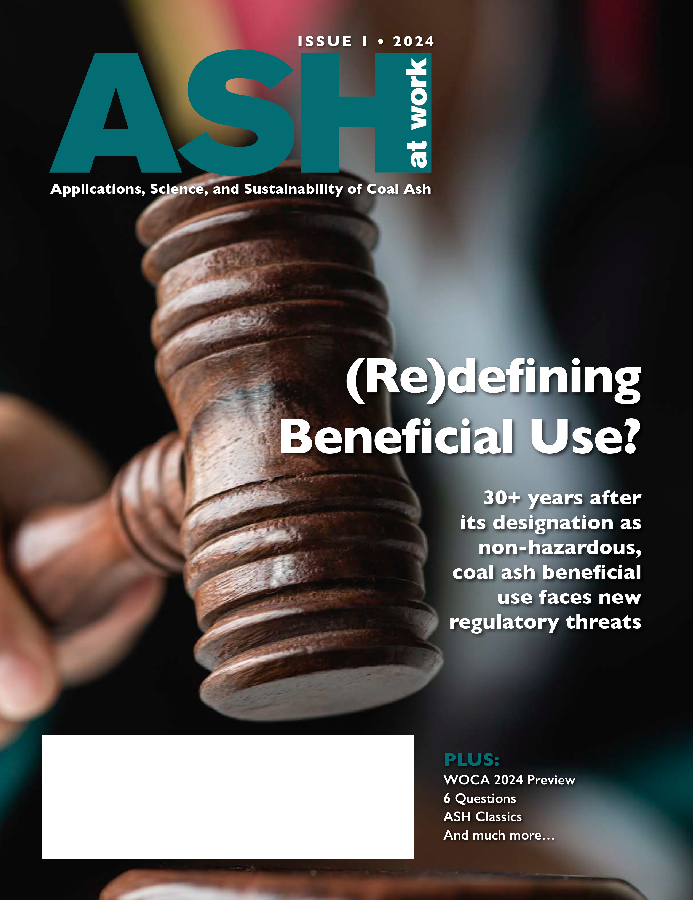
and other industry gatherings to promote understanding and facilitate connections. We publish a biannual magazine,
ASH at Work; an exclusive member e-newsletter, The Phoenix, and provide news briefs and updates to keep members and stakeholders engaged in ongoing developments. We archive research reports and industry documents going back 40 years, and we offer expertise in recycling coal ash, boiler slag and FGD materials. Every two years we co-host the industry's most prominent event, "The World of Coal Ash," with participants from 30 countries.
Coal Combustion "Products"
Emphasizing the Commercial Value
of Recycling Industrial Materials
The materials created by coal-fueled electricity generation
are recognized internationally as "products," e.g. "coal combustion products." The term "products" was coined by
the U.S. Environmental Protection Agency to emphasize the commercial value of recycling industrial materials, including tire scraps, foundary sands and slags, iron and steel slag, pulp and paper, and constuction and demolition materials. The EPA's Resource Conservation Challenge and the Industrial Resources Council are excellent sources of information on industrial recycling.
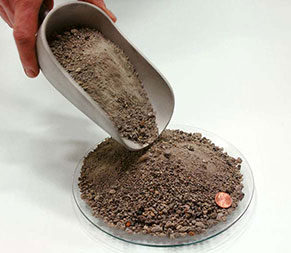
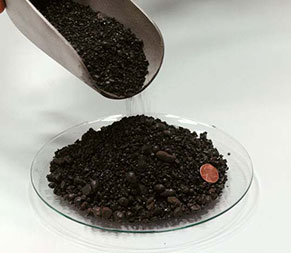
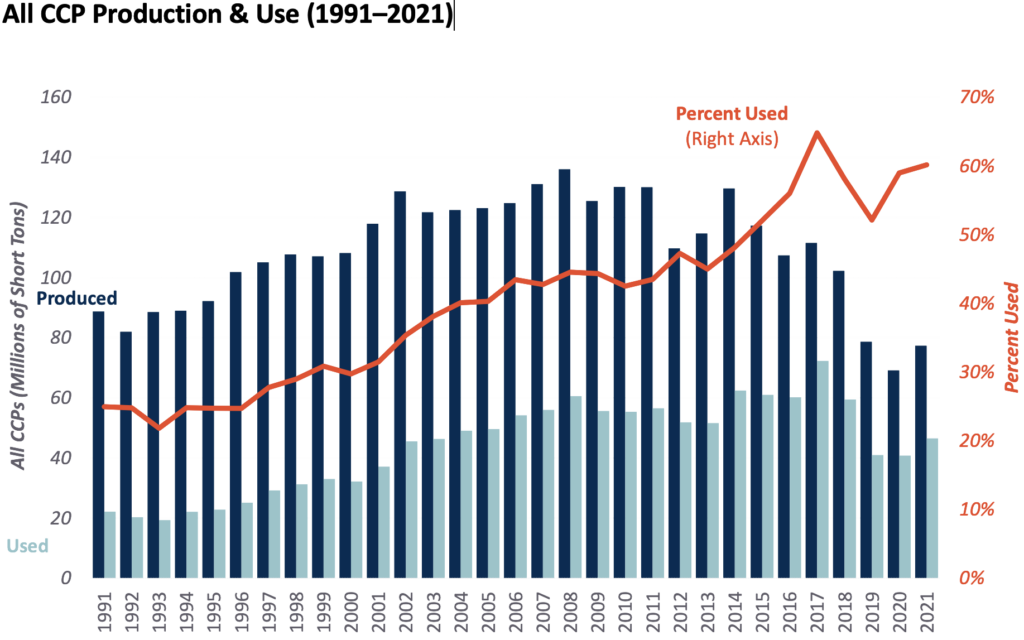
The EPA has set national priorities to increase what the agency terms "beneficial use." In 2008, the United States produced more than 130 million tons of coal combustion products. While 43 percent were used beneficially, nearly 75 million tons were disposed of. The ACAA collects and analyzes these numbers every year and releases the data in CCP Production & Use Reports.
Fly Ash: The Coal Combustion Product
in Greatest Demand
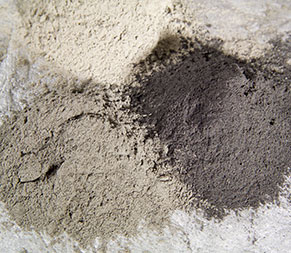
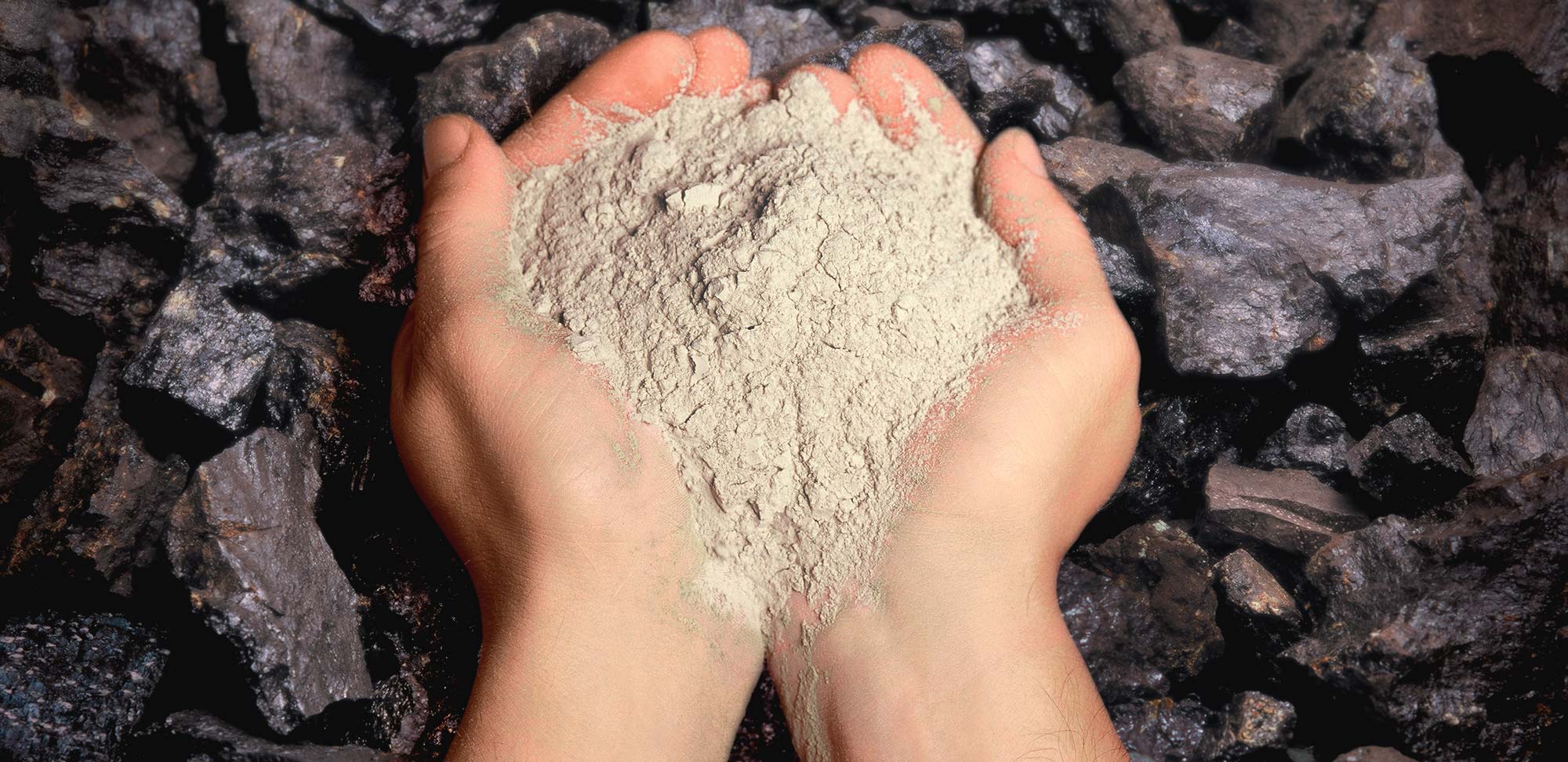
Fly ash is the coal combustion product recycled most, primarily in concrete to enhance its strength and resistance to the elements. Last year the U.S. produced about 70 million tons of this material and nearly 45 percent was recycled. The chemical make-up of fly ash is nearly identical to volcanic ash. The Roman Empire used volcanic ash to create concrete for structures we admire today. Concrete made with fly ash extends the life of construction projects by decades, minimizing the need for and environmental impacts of rebuilding. Plus, long lasting infrastructure saves taxpayers. Fly ash requires no kilning and therefore produces no carbon dioxide nor other emissions, unless blended with traditional materials. Also, fly ash concrete uses dramatically less water. Some projects have completely replaced traditional materials with fly ash to cement aggregates to produce concrete. Fly ash comes in two classes:"Class C" and "Class F"; Class C is self-cementing and can be mixed on the project site. In most cases fly ash is not only less expensive, but technically superior as long as those involved are well informed. Builders, engineers, architects, scientists, and others are continually developing and perfecting product specifications. The American Coal Ash Association serves a critical role keeping industry apprised and engaged.
The Colosseum was constructed nearly 2,000 years ago of concrete
made with volcanic ash. Fly ash is virtually identical in its composition and offers today's concrete structures long-lasting durability, strength, and resistance to the elements.
|